
Find your pearl size.
Pearl size is not an isolated number. The same 8mm pearl can feel very different as a stud, a pendant, or a full strand.
A practical place to start
7-8mm is a balanced starting point for many first pearl pieces and everyday styles. Choose smaller for a quieter look, or larger when you want the pearl to read more clearly.
Size at a glance
Start with the presence you want, then compare the same diameter as a stud and a strand below.
Quiet and delicate
For understated studs, fine layering, and a lighter visual presence.
Balanced and familiar
A balanced starting point for first pearl jewelry and daily wear.
More visible
For photographs, video calls, events, or a more visible everyday look.
Statement scale
For a focal pearl that deliberately leads the look.
See the difference when worn
Choose one pearl diameter to see it as both a stud and a strand. The model and framing stay consistent within each set; use product measurements for an exact size.
Both images change together, so you can compare the same diameter across two styles.
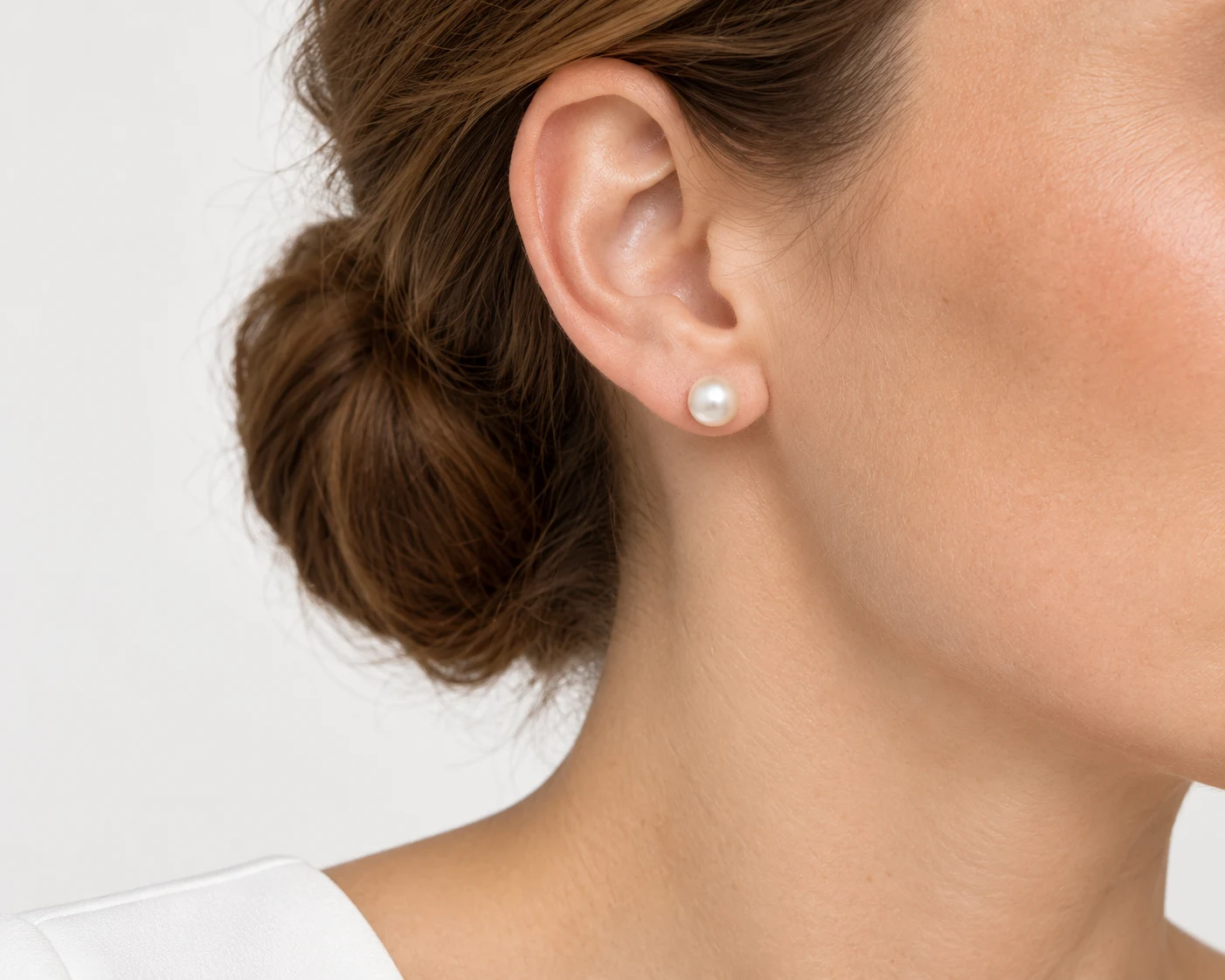
Stud earrings
A single pearl beside the face.
Pearl strand
Repeated pearls across the neckline.
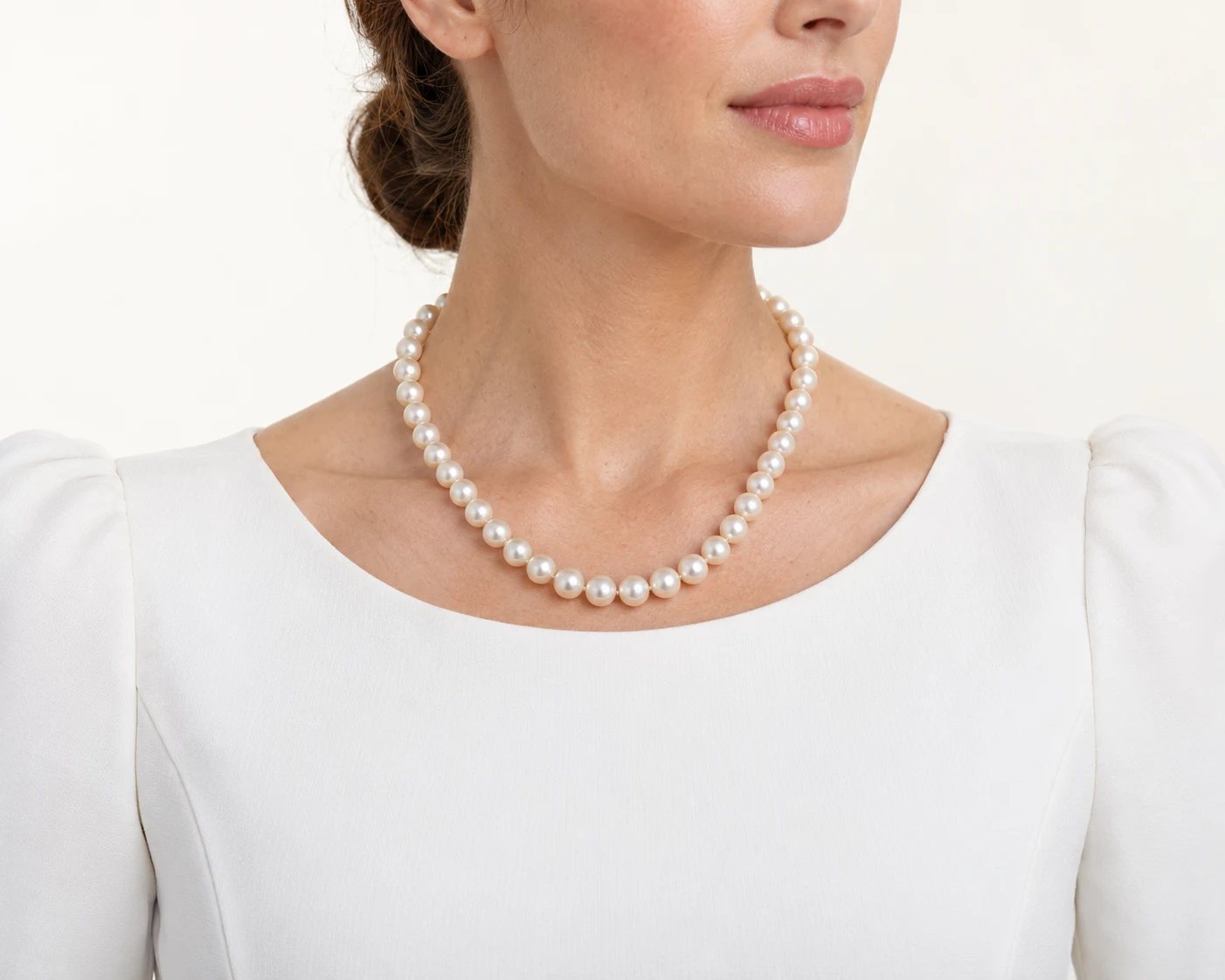
Visual size comparison. Images illustrate approximate pearl-size impressions, not measured on-body fit or actual products. Small differences in pose, lighting and pearl appearance may remain. A strand repeats the pearl scale across the neckline, so the same diameter can feel more substantial than a single stud. Confirm the product diameter and overall jewelry dimensions before buying.
The same size does not mean the same rarity
Within the same pearl type and at comparable quality, larger pearls are generally scarcer and may cost more. Across pearl types, millimeters alone are not a fair price comparison.
Akoya
At 9mm: relatively largeRead size alongside roundness, bright luster, surface, and how closely the pearls match.
Freshwater
At 9mm: judge more than sizeShape, luster, surface, nacre character, and whether the pearl is round or baroque all matter.
Tahitian
At 9mm: a broader natural scaleColor, overtone, surface, shape, and luster remain essential when comparing pearls at the same size.
South Sea
At 9mm: near the smaller endA 9mm South Sea pearl may sit near the smaller end of its category rather than represent an unusually large pearl.
Why size can affect price: rarity is judged within a pearl family and alongside quality. A 9mm Akoya and a 9mm South Sea pearl should not be compared by millimeters alone.
How pearl measurements are written
Round pearls are usually described by diameter. Non-round pearls often need two dimensions, so check exactly what the product page is measuring.
Round pearls
Usually listed by diameter across the pearl. A range means individual pearls fall within that window.
Example: 7-8mmOval and drop pearls
Often listed as length x width. Confirm which number describes the longer direction.
Example: 10 x 8mmBaroque pearls
Usually measured at maximum length and width. Similar measurements can still look visibly different.
Example: approx. 12 x 9mmBefore you buy: confirm whether the page gives one size or a range, and whether the dimensions refer to the pearl itself or the entire piece.
Before choosing a size
Size is one part of the final impression. Read it together with the product photographs and full specification.
Look at luster
A smaller pearl with lively reflection can feel more refined than a larger pearl with weaker luster.
Check the setting
A halo, metal rim, or clustered design can make the finished piece appear larger than the pearl alone.
Confirm the measurement
Check diameter versus length x width, exact size versus range, and pearl size versus total jewelry dimensions.
Frequently asked questions
Is 7-8mm the best pearl size?
It is a balanced starting point for many first pearl pieces and everyday styles, but it is not a universal rule. Choose based on the piece, your preferred presence, and the way you plan to wear it.
Do larger pearls always cost more?
Within the same pearl type and at comparable quality, larger pearls are generally scarcer and may cost more. Different pearl types have different natural size ranges, so millimeters alone do not determine value.
Is a 9mm Akoya the same as a 9mm South Sea pearl?
No. The two sizes sit in different natural ranges. Compare each pearl within its own family, then consider luster, shape, surface, color, and matching.
How are baroque pearls measured?
They are commonly listed by maximum length x width. Natural irregularity means two pearls with similar measurements may still have different outlines.
What size is easiest for a first pearl piece?
For many people, 7-8mm is an easy starting point because it feels visible but not overly formal. A quieter 5-6mm or a more noticeable 9-10mm can be just as appropriate for a different style.
Let the setting, not the number alone, guide you.
Use the worn comparisons as a visual reference, then check each product page for the exact pearl type, dimensions, shape, luster, and setting.