
Pearl Grading
Pearl grades are not universal: A, AA, AAA, and AAAA are defined by each seller. Compare SUHA’s standards below, and read every grade alongside the product’s measurements, photographs, and disclosed details.
Freshwater
Freshwater pearls generally range from about 5mm to 13mm. Sizes below 7mm have a more delicate presence, while 7–9mm is common in necklaces and everyday jewelry. Pearls from 9–10mm upward are larger and typically less common. Their broad variety of natural shapes and colors makes the stated shape an important part of the grade.
| Quality factor | A | AA | AAA | AAAA |
|---|---|---|---|---|
| Overview | Entry grade with readily visible natural character. | Mid grade with moderate natural variation. | High grade with a cleaner, more refined appearance. | Very high grade selected for exceptional overall refinement. |
| Surface | Heavy blemishing; 50% or less of the surface is clean. | Minor to moderate blemishing; approximately 70–80% is clean. | Minor blemishing; at least 90% of the surface is clean. | Very minor to no blemishing; at least 95% of the surface is clean. |
| Luster | Poor | Medium | High | Very high |
| Shape | Off-round | Off-round | Near-round to round | Round |
Akoya pearls generally range from about 2mm to 10mm. Sizes below 6mm are more delicate, while 6–8mm is common across classic Akoya jewelry. Pearls above 8mm are larger and less common. Akoya grading gives particular weight to crisp luster, surface cleanliness, nacre appearance, and roundness.
| Quality factor | A | AA | AA+ | AAA | Hanadama* |
|---|---|---|---|---|---|
| Overview | Entry grade with visible natural variation. | Mid grade with a more even overall appearance. | High grade with strong visible refinement. | Very high grade selected for stricter surface and luster standards. | Certified premium Akoya; the applicable laboratory documentation must be stated with the product. |
| Surface | Heavy blemishing; 50% or less of the surface is clean. | Minor to moderate blemishing; approximately 70–80% is clean. | Minor blemishing; at least 90% of the surface is clean. | Very minor to no blemishing; at least 95% of the surface is clean. | At least 99% clean, with very minor to no visible blemishing. |
| Luster | Poor | Medium | High | Very high | Superior |
| Nacre | Thin | Medium | Thick | Very thick | Very thick |
| Shape | Round to off-round | Round | Very round | Very round | Very round |
*Hanadama is not a universal replacement for AAAA. It describes qualifying Akoya pearls supported by the applicable independent Japanese laboratory documentation; check the individual product listing for included documents.
Tahitian pearls generally begin around 8mm and may reach approximately 20mm in rare cases. Sizes around 9–11mm are common in jewelry, while pearls from 11–12mm upward are larger and less common. Their natural dark body colors and varied overtones are evaluated together with luster and the main viewing surface.
| Quality factor | A | AA | AAA | AAAA |
|---|---|---|---|---|
| Overview | Entry grade with prominent natural surface character. | Mid grade with a cleaner main viewing area. | High grade with strong luster and limited visible features. | Very high grade with exceptional surface cleanliness and luster. |
| Surface | Features affect at least 60% of the surface; up to 20% may contain deeper imperfections. | About 40% is clean; approximately 50% has minor features and 10% may contain deeper imperfections. | At least 80–85% is clean; the remaining area has minor features, with no more than one or two deeper imperfections. | At least 95% is clean, with any imperfections concentrated within the remaining 5%. |
| Luster | Poor | Medium | High | Very high |
| Common A-D reference* | D quality | C quality | A/B quality | A quality |
*A-D terminology and retail letter grades come from different grading traditions. This row is a practical reference, not a universal equivalence.
White and Golden South Sea pearls generally range from about 7–8mm to 20mm in exceptional cases. Sizes around 9–11mm are common in jewelry, while pearls from 11–12mm upward are larger and less common. Their scale, nacre, color, and satin-to-bright glow should be considered together.
| Quality factor | A | AA | AAA | AAAA |
|---|---|---|---|---|
| Overview | Entry grade with prominent natural surface character. | Mid grade with a cleaner main viewing area. | High grade with strong luster and limited visible features. | Very high grade with exceptional surface cleanliness and luster. |
| Surface | Features affect at least 60% of the surface; up to 20% may contain deeper imperfections. | About 40% is clean; approximately 50% has minor features and 10% may contain deeper imperfections. | At least 80–85% is clean; the remaining area has minor features, with no more than one or two deeper imperfections. | At least 95% is clean, with any imperfections concentrated within the remaining 5%. |
| Luster | Poor | Medium | High | Very high |
| Common A-D reference* | D quality | C quality | A/B quality | A quality |
*A-D terminology and retail letter grades come from different grading traditions. This row is a practical reference, not a universal equivalence.
Look beyond the letter grade
Ask for close-up photographs of the actual pearls. Surface marks, shape and reflected light reveal different details, so review more than one angle.
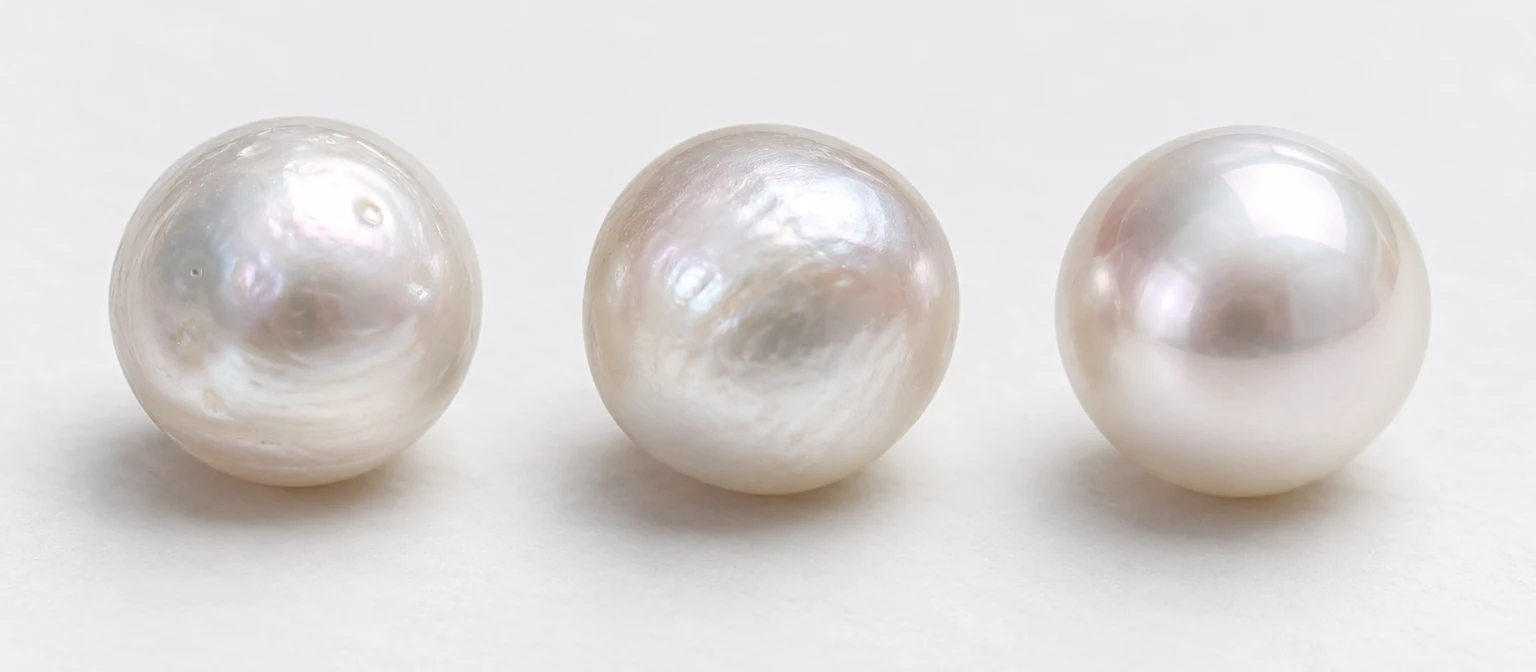
SurfaceLook for dimples, growth marks and how visible they are in the finished piece.
ShapeCheck the outline from different angles, especially for near-round and baroque pearls.
LusterCompare the clarity of reflections under similar lighting. A photograph alone cannot establish a grade.